

TTM Test
Cookie Policy
Cookie Policy
This Cookie Policy explains the use of cookies and similar technologies on the website operated by TTM Test Teknolojileri Merkezi (TTM TEST). It has been prepared with reference to Turkish Personal Data Protection Law No. 6698 (KVKK) and the guidance of the Turkish Personal Data Protection Authority.
1. What Is a Cookie?
Cookies are small data files that may be stored on your browser or device when you visit a website. They may be used to maintain sessions, support security, remember preferences and provide certain third-party functions.
2. Types of Cookies That May Be Used
- Strictly necessary cookies: Required for core website functions, session management and security.
- Preference/functionality cookies: May remember choices such as language or cookie-notice status.
- Security and form services: Services such as reCAPTCHA may be used to protect contact and quotation forms against abuse.
- Third-party content cookies: Embedded services such as Google Maps may use cookies or similar technologies when the relevant page or feature is used.
TTM TEST does not intend to use advertising/targeting cookies for its own advertising purposes unless an appropriate notice and, where legally required, a user-choice/consent mechanism is provided. If optional analytics, advertising or similar cookies are introduced in the future, they should be activated in accordance with applicable consent requirements.
3. Purposes of Use
- Keeping the website secure and operational,
- Managing sessions and security processes,
- Protecting and processing website forms,
- Remembering user preferences,
- Providing requested third-party functions such as maps.
4. Legal Basis
Strictly necessary cookies may be used where required to provide a service expressly requested by the user or to operate the website securely under applicable legal grounds. Optional cookies that require consent should not be activated before a valid choice/consent is obtained.
5. Third-Party Services
The website may use third-party services such as Google Maps and Google reCAPTCHA. The providers of these services may apply their own cookie and privacy practices. If personal data is transferred outside Türkiye through such services, the transfer must be handled in accordance with Article 9 of the KVKK and applicable transfer rules.
6. Managing Cookies
You can delete, block or restrict cookies through your browser settings. Blocking strictly necessary cookies may prevent some website functions from working correctly.
7. Retention
Cookie retention periods vary according to purpose and cookie type. Session cookies may expire at the end of a session, while persistent cookies may remain for the period required for their purpose or until deleted by the user.
8. Personal Data and Your Rights
Where cookies involve the processing of personal data, please see our Personal Data Protection Notice (KVKK) for further information.
9. Updates
This policy may be updated when technologies, website functions or applicable rules change. The current version is published on this page.
10. Contact
For questions about cookies or personal data, contact TTM TEST at iletisim@ttmtest.com.tr or Burhaniye, 4. Ara Sk. 34676 Üsküdar/İstanbul, Türkiye.
CPT (Cone Penetration Test)
Cone Penetration Testing (CPT) is a high-resolution in-situ geotechnical test in which an instrumented cone is pushed into the ground at a controlled rate while penetration resistance is recorded continuously.

Seismic CPT (SCPT) – Seismic Cone Penetration Test
Seismic CPT (SCPT) combines CPT/CPTu penetration measurements with seismic wave-velocity data to characterize both static and dynamic ground response.
Flat Dilatometer Test (DMT)
Flat Dilatometer Testing (DMT) is an in-situ test used to assess stress and deformation behaviour by expanding a flexible membrane mounted on a flat blade pushed into the soil.
Seismic Dilatometer Test (SDMT)
Seismic Dilatometer Testing (SDMT) combines DMT membrane measurements with shear-wave velocity (Vs) data to assess static and dynamic soil behaviour in one investigation.
Standard Penetration Test (SPT)
The Standard Penetration Test (SPT) is a borehole-based dynamic in-situ test used to obtain penetration resistance and representative samples at selected depths.
Pressuremeter Test
Pressuremeter testing evaluates the pressure-deformation response of the ground in a borehole and supports assessment of in-situ stiffness and strength behaviour.
In-Situ Permeability Tests
In-situ permeability testing evaluates the hydraulic behaviour of soil or rock and supports seepage, drainage and groundwater-related engineering decisions.
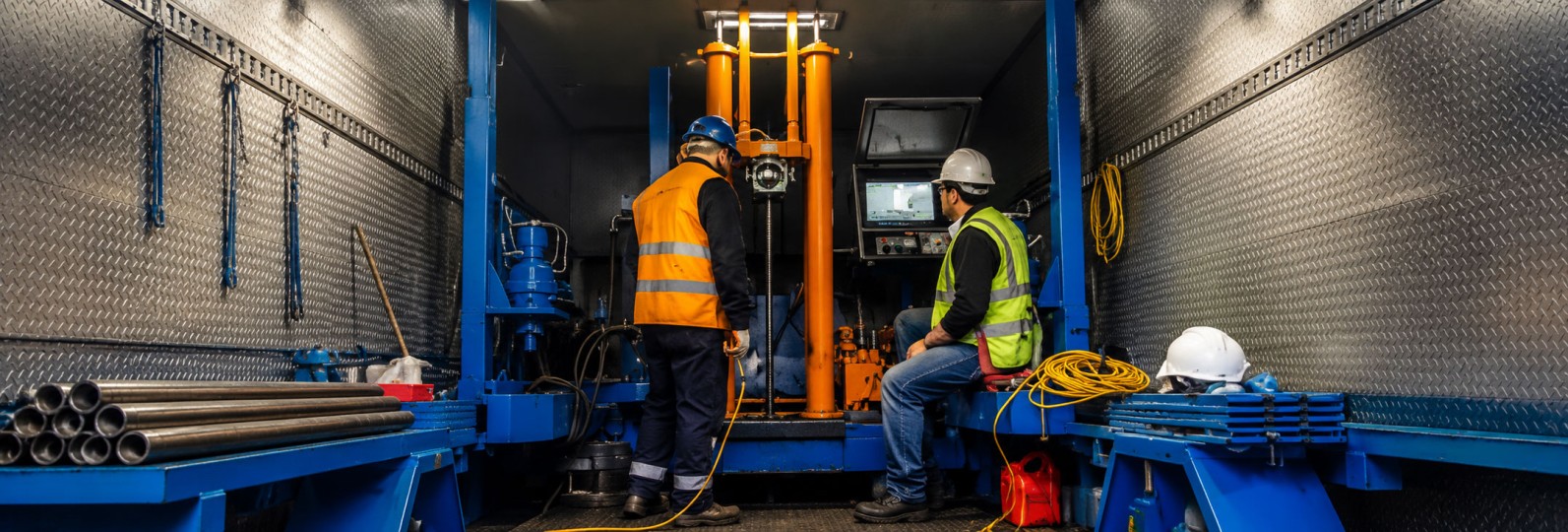
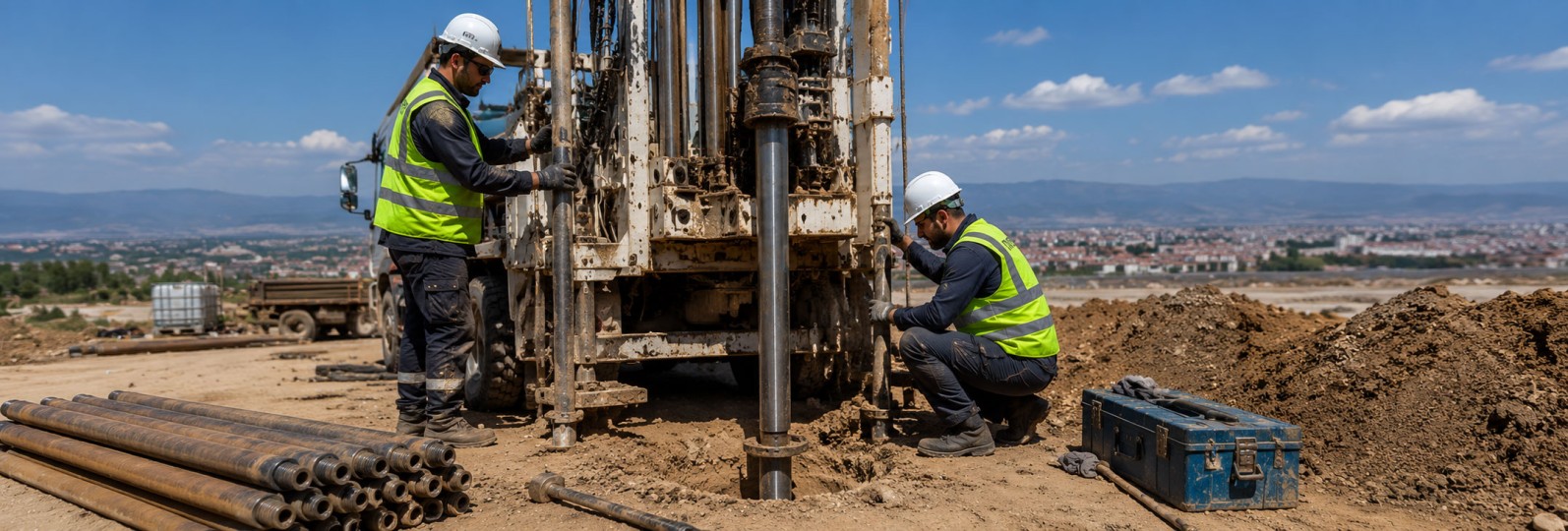
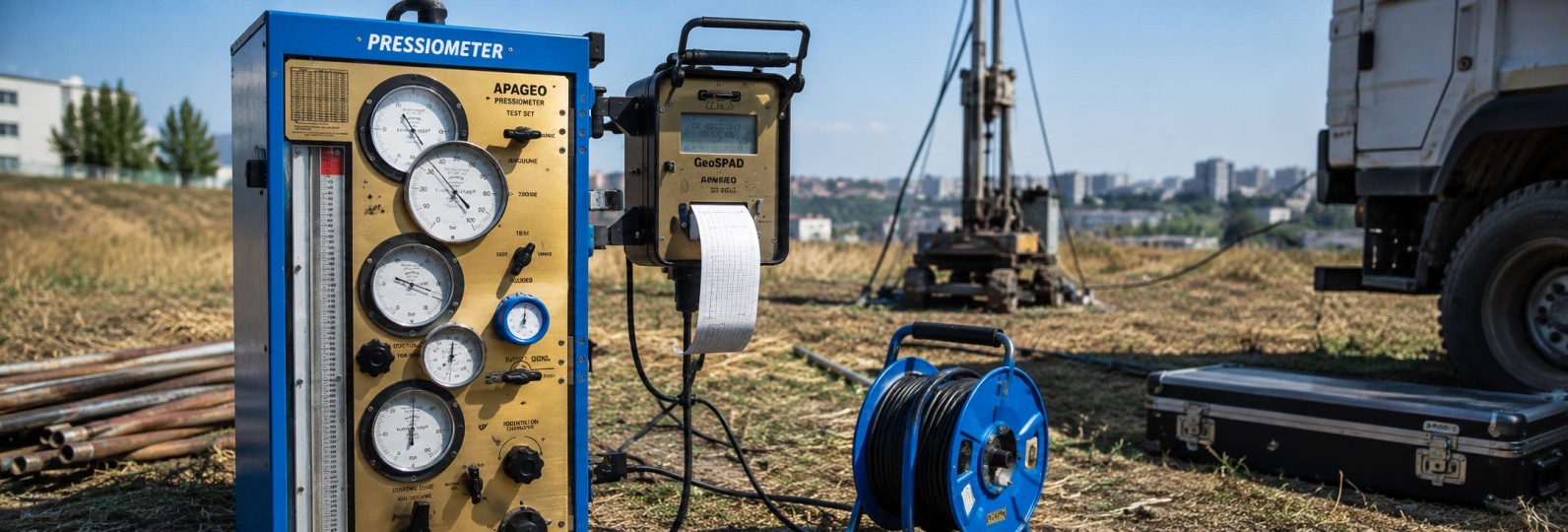
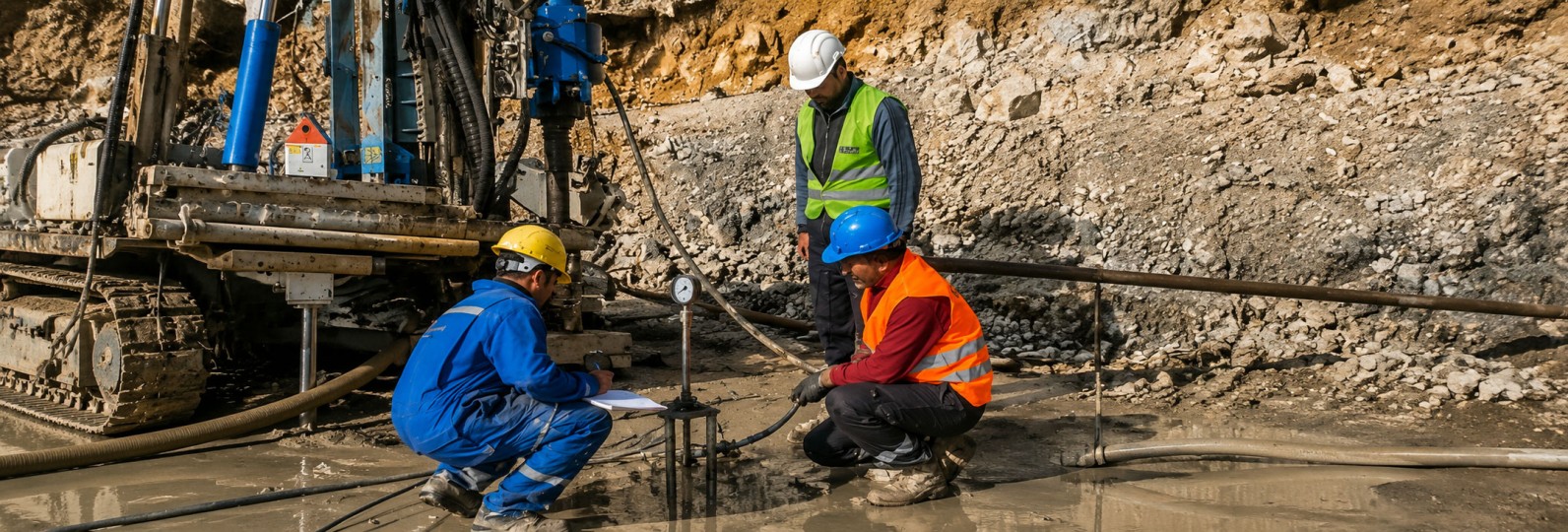
Why TTM TEST?
Why TTM TEST?
Since 1994, TTM TEST has supported projects with geotechnical drilling, in-situ testing, CPT/SCPT/DMT/SDMT, geophysics, instrumentation, laboratory testing and engineering services. Experienced technical teams, modern equipment and disciplined reporting provide reliable data for engineering decisions.
Selected geotechnical investigation, drilling, in-situ testing and engineering projects delivered by TTM TEST.
TTM TEST supports projects with integrated site investigation, geotechnical drilling, in-situ testing, laboratory and engineering services.
Frequently Asked Questions
CPT is an in-situ geotechnical test in which an instrumented cone is pushed into the ground at a controlled rate while cone resistance and sleeve friction are recorded continuously. CPTu also measures pore-water pressure.
CPT is widely used in clay, silt and sand, particularly soft fine-grained and loose granular soils. Gravel, cobbles, boulders or very hard layers may restrict penetration and should be considered during planning.
Standard CPT measures cone tip resistance and sleeve friction. CPTu adds pore-water pressure measurement, providing additional information for interpreting saturated fine-grained soils and layer transitions.
SCPT combines CPT/CPTu penetration measurements with seismic measurements so that soil stratigraphy and shear-wave velocity (Vs) can be evaluated within the same investigation programme.
SCPT can provide cone resistance, sleeve friction, pore-pressure data where CPTu is used, and a depth-dependent shear-wave velocity (Vs) profile.
DMT is an in-situ test in which a flexible membrane on a flat blade is expanded under controlled pressure to assess soil stress and deformation behaviour.
SDMT combines conventional DMT measurements with seismic Vs measurements, allowing static deformation/stress indicators and dynamic soil properties to be evaluated in the same profile.
Yes. CPT is commonly carried out on land and can also be performed in marine or coastal environments when suitable platforms, reaction systems, access and equipment are provided.
No. SPT is a dynamic test performed in a borehole at discrete intervals, while CPT is a static push test that provides continuous profiling. The methods may be used together depending on project objectives.
Project location, required test type, approximate number and target depth of tests, available ground information, site access, working level and reporting requirements help define an efficient field programme and quotation.
Professional Engineering Solutions for Your Project
- Experienced Technical Team
- Prompt Project Review
- Nationwide Field Capability
- Reliable Testing and Reporting