

TTM Test
Cookie Policy
Cookie Policy
This Cookie Policy explains the use of cookies and similar technologies on the website operated by TTM Test Teknolojileri Merkezi (TTM TEST). It has been prepared with reference to Turkish Personal Data Protection Law No. 6698 (KVKK) and the guidance of the Turkish Personal Data Protection Authority.
1. What Is a Cookie?
Cookies are small data files that may be stored on your browser or device when you visit a website. They may be used to maintain sessions, support security, remember preferences and provide certain third-party functions.
2. Types of Cookies That May Be Used
- Strictly necessary cookies: Required for core website functions, session management and security.
- Preference/functionality cookies: May remember choices such as language or cookie-notice status.
- Security and form services: Services such as reCAPTCHA may be used to protect contact and quotation forms against abuse.
- Third-party content cookies: Embedded services such as Google Maps may use cookies or similar technologies when the relevant page or feature is used.
TTM TEST does not intend to use advertising/targeting cookies for its own advertising purposes unless an appropriate notice and, where legally required, a user-choice/consent mechanism is provided. If optional analytics, advertising or similar cookies are introduced in the future, they should be activated in accordance with applicable consent requirements.
3. Purposes of Use
- Keeping the website secure and operational,
- Managing sessions and security processes,
- Protecting and processing website forms,
- Remembering user preferences,
- Providing requested third-party functions such as maps.
4. Legal Basis
Strictly necessary cookies may be used where required to provide a service expressly requested by the user or to operate the website securely under applicable legal grounds. Optional cookies that require consent should not be activated before a valid choice/consent is obtained.
5. Third-Party Services
The website may use third-party services such as Google Maps and Google reCAPTCHA. The providers of these services may apply their own cookie and privacy practices. If personal data is transferred outside Türkiye through such services, the transfer must be handled in accordance with Article 9 of the KVKK and applicable transfer rules.
6. Managing Cookies
You can delete, block or restrict cookies through your browser settings. Blocking strictly necessary cookies may prevent some website functions from working correctly.
7. Retention
Cookie retention periods vary according to purpose and cookie type. Session cookies may expire at the end of a session, while persistent cookies may remain for the period required for their purpose or until deleted by the user.
8. Personal Data and Your Rights
Where cookies involve the processing of personal data, please see our Personal Data Protection Notice (KVKK) for further information.
9. Updates
This policy may be updated when technologies, website functions or applicable rules change. The current version is published on this page.
10. Contact
For questions about cookies or personal data, contact TTM TEST at iletisim@ttmtest.com.tr or Burhaniye, 4. Ara Sk. 34676 Üsküdar/İstanbul, Türkiye.
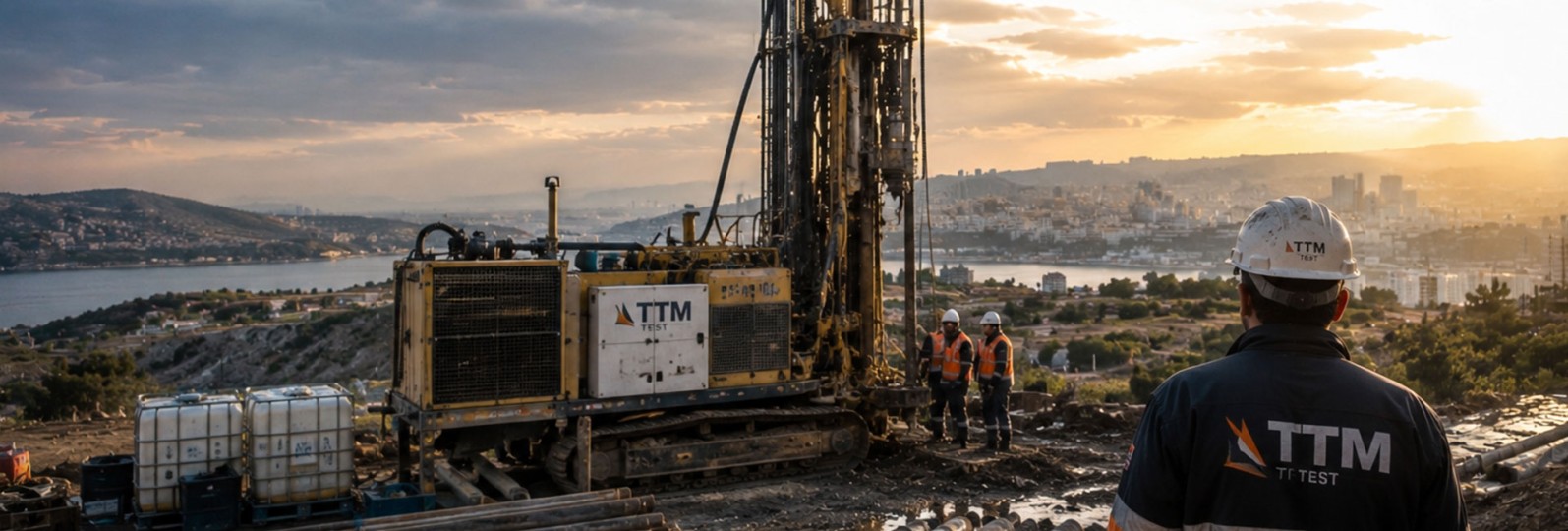
Geotechnical Investigation Drilling
Geotechnical investigation drilling provides direct information on soil and rock conditions for safe and economical engineering design.

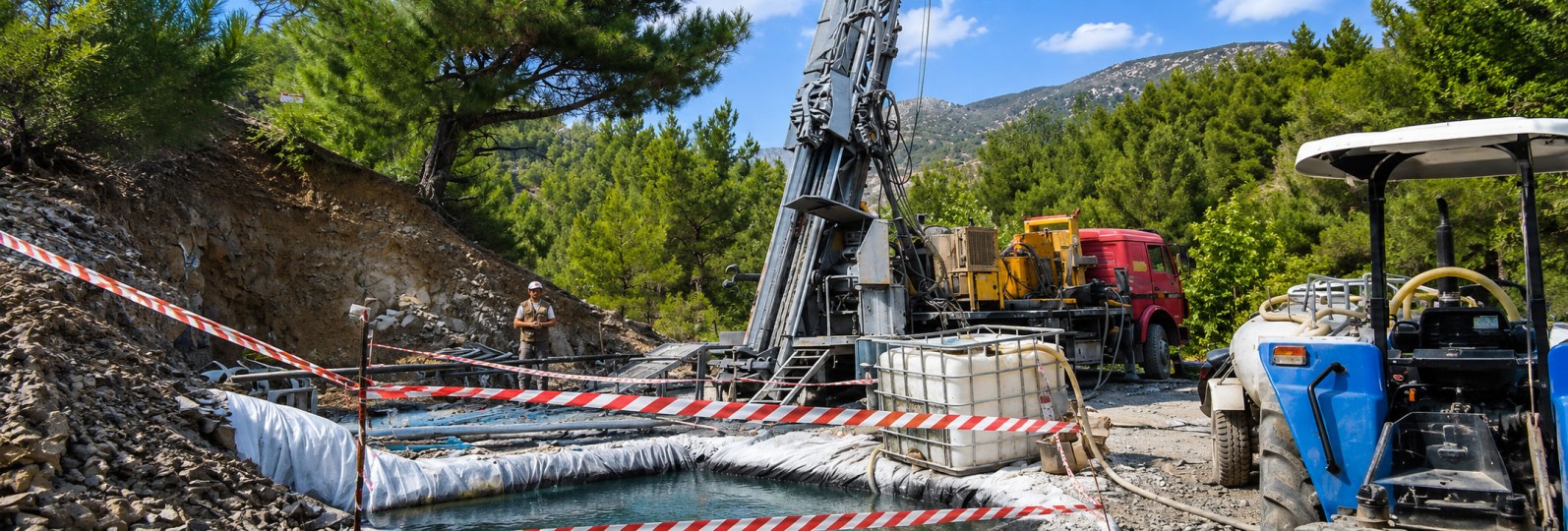
Water Supply Well Drilling
Water-supply drilling is used to investigate and develop groundwater resources for project, industrial, municipal and agricultural requirements.
Mineral Exploration Services
Mineral exploration combines geological investigation, core drilling and sampling to obtain reliable information on subsurface mineralization and geological structure.
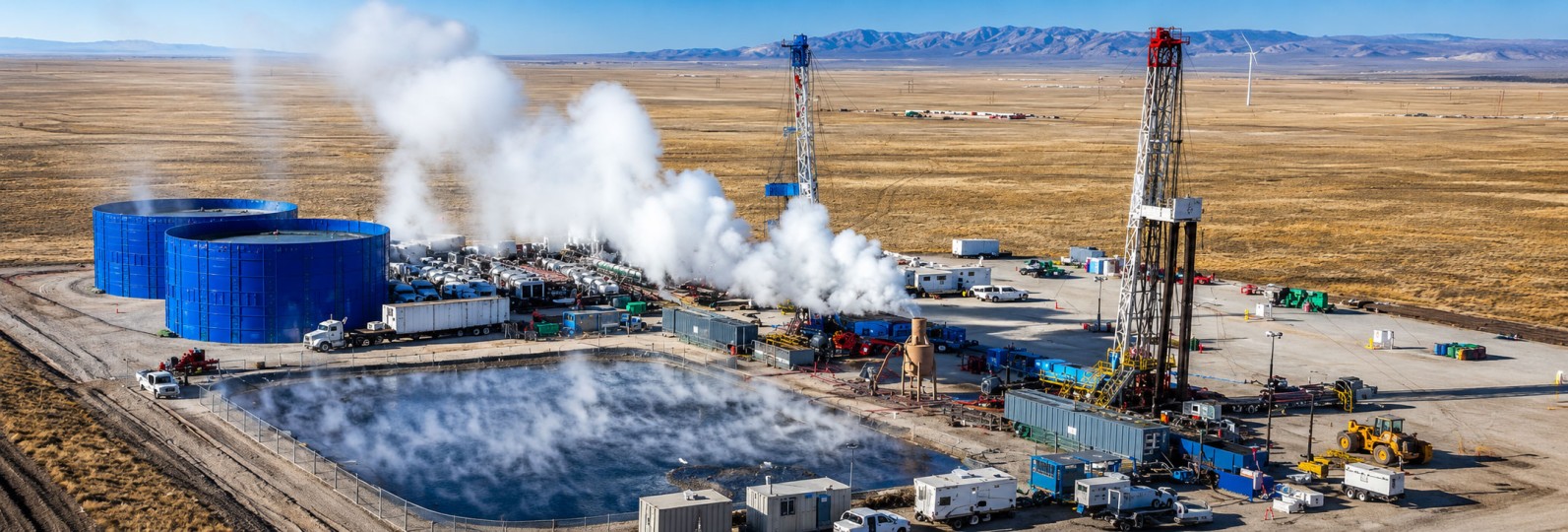
Geothermal Drilling Services
Geothermal drilling supports investigation and development of subsurface thermal resources through project-specific drilling programmes.

Why TTM TEST?
Why TTM TEST?
Since 1994, TTM TEST has supported projects with geotechnical drilling, in-situ testing, CPT/SCPT/DMT/SDMT, geophysics, instrumentation, laboratory testing and engineering services. Experienced technical teams, modern equipment and disciplined reporting provide reliable data for engineering decisions.
Selected geotechnical investigation, drilling, in-situ testing and engineering projects delivered by TTM TEST.
TTM TEST supports projects with integrated site investigation, geotechnical drilling, in-situ testing, laboratory and engineering services.
Frequently Asked Questions
Drilling investigations provide direct information on subsurface soil and rock conditions, groundwater and representative samples needed for geotechnical evaluation and engineering design.
Geotechnical drilling is a controlled site-investigation method used to create boreholes, identify subsurface layers, recover samples and perform selected in-situ tests.
It is used for buildings, industrial facilities, roads, railways, bridges, tunnels, dams, energy facilities and other infrastructure where ground conditions affect design or construction.
Core drilling recovers cylindrical rock or hard-material samples so lithology, discontinuities and engineering characteristics can be logged and evaluated.
SPT is a borehole-based dynamic penetration test that records the number of blows required for penetration over a defined interval and commonly provides a disturbed soil sample.
Depth is selected according to structure type, foundation loads, expected ground conditions, geological setting and the depth at which ground conditions no longer materially affect the engineering problem.
Yes. Depending on ground conditions and project requirements, disturbed soil samples, undisturbed samples and rock cores can be obtained for logging and laboratory testing.
Groundwater observations can be recorded in boreholes during and after drilling. Where longer-term behaviour is important, dedicated monitoring installations may be required.
Duration depends on borehole depth, geology, access, drilling method, sampling/test frequency and the number of investigation points. A project-specific programme is prepared before mobilization.
Yes. Borehole logs, samples, in-situ test data, groundwater observations and other field records can be compiled into the required investigation or geotechnical reporting format.
Equipment is selected according to access and geology and may include tracked or truck-mounted drilling rigs, core barrels, sampling tools, SPT systems and complementary field-test equipment.
Drilling is one investigation method. A geotechnical investigation is broader and can combine drilling, sampling, CPT/SPT and other in-situ tests, geophysics, laboratory testing and engineering interpretation.
Reliable subsurface data reduces uncertainty in foundation and ground-related design by identifying layer conditions, groundwater and potential geotechnical constraints before construction.
TTM TEST plans field mobilization according to project location, access, scope and equipment requirements and provides services for projects across Türkiye.
Professional planning, appropriate equipment, controlled sampling/testing and complete field records improve data quality and reduce the risk of design decisions being based on incomplete subsurface information.
Professional Engineering Solutions for Your Project
- Experienced Technical Team
- Prompt Project Review
- Nationwide Field Capability
- Reliable Testing and Reporting